What a Programmatic Advertising Agency Manages
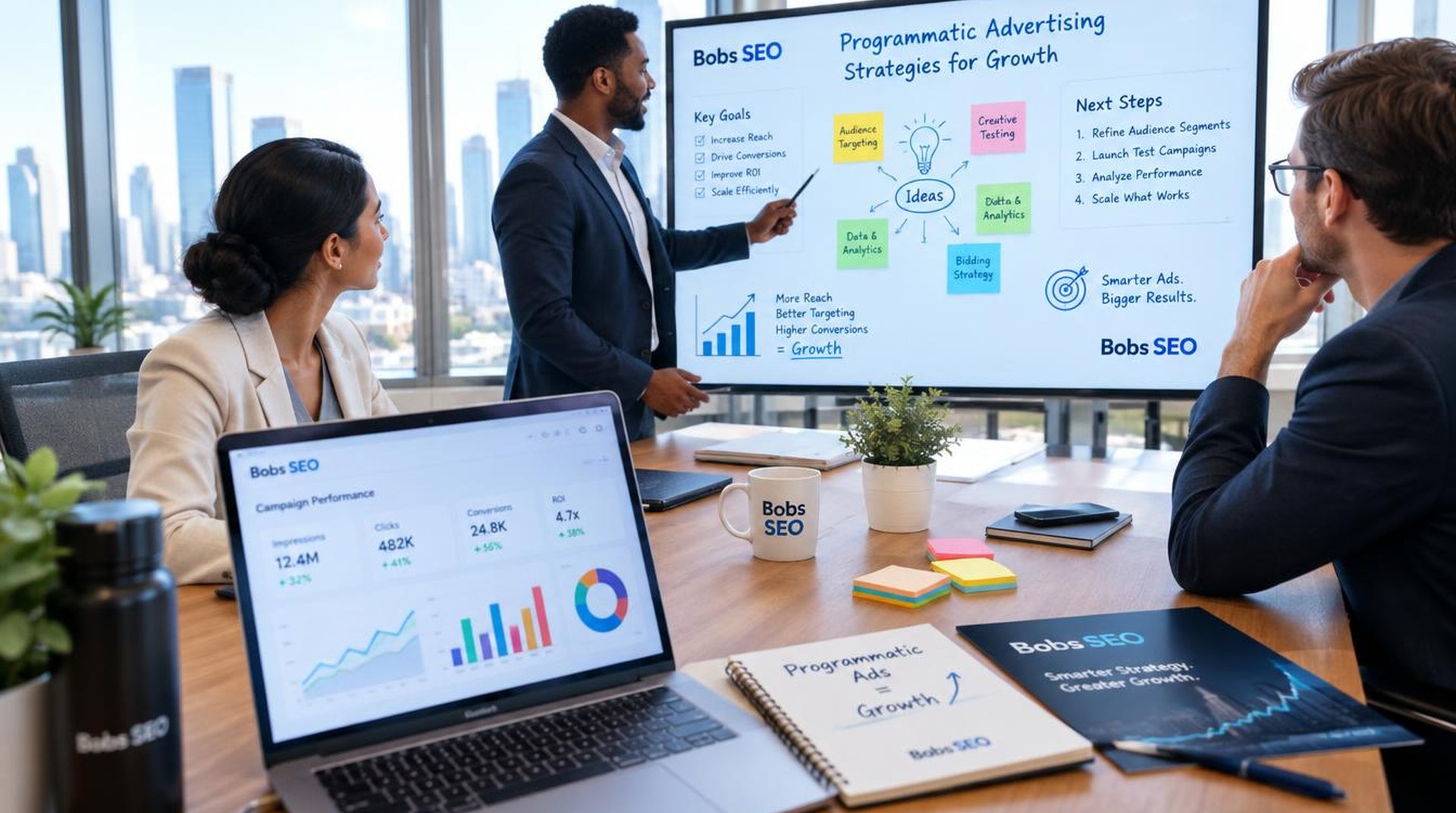
A programmatic advertising agency can manage planning, media buying, creative coordination, campaign oversight, and reporting. A demand-side platform (DSP) is software advertisers and agencies use to buy digital ad inventory across publishers and channels.
The DSP handles buying tasks, but the agency brings the strategy and skilled execution around that software. It helps define an audience, choose suitable inventory, activate campaigns, coordinate creative, and use data to guide decisions. Reporting then connects activity to the goals you set.
- Planning: set goals, audiences, budget, and inventory priorities.
- Activation: configure the DSP and launch approved ads.
- Optimization: review delivery and adjust campaign settings.
- Reporting: show spend, activity, and progress toward goals.
A paid media agency may run programmatic advertising alongside other paid channels. The label describes a broad service area, not one specific buying method. PDM agency is not a standardized label, so ask which media services it actually covers before comparing providers.
Market growth offers context, not a forecast for your campaign. U.S. programmatic digital display ad spending rose from $4.99 billion in 2013 to $156.82 billion in 2024. Global programmatic ad spending was estimated at $595 billion in 2024 and forecast to approach $800 billion by 2028.
Those totals do not show whether a particular plan will work for your business. To understand what the agency does, it helps to see how software and marketplaces turn an available ad slot into a served impression.
How Programmatic Ad Buying Works
When you open a news page, an available ad slot can be matched with an ad for that page visit. In real time, an auction may happen in a fraction of a second, before the page finishes loading.
The publisher’s supply-side platform (SSP) makes the impression available, then an ad exchange sends a bid request to eligible DSPs. Those platforms assess the opportunity against campaign settings and bid. The winning bid secures the placement, and its ad is served to the user.
| Deal type | Access | Price or delivery arrangement | Useful distinction |
|---|---|---|---|
| RTB | Open auction access | Buyers bid per impression | Winning bid gets placement |
| Private marketplace | Invited buyers | Auction or agreed terms | Publisher limits participation |
| Programmatic guaranteed | Direct buyer and publisher | Agreed price and volume | Reserved delivery |
| Preferred deal | Selected buyer gets first look | Agreed price, no guaranteed volume | Buyer can decline impressions |
Amazon DSP is programmatic, though inventory access and platform ecosystems differ. There is no definitive answer to “What are the top DSPs in the US?” or “What are the top 10 DSPs?” without a date and ranking criterion. Compare inventory access, targeting, reporting, and fit instead of relying on an unsupported list.
These buying options can serve ads across different screens and formats. The right inventory depends on where your audience spends time and what the campaign needs to accomplish.
Which Channels and Inventory Can Campaigns Reach?
A banner ad can appear beside an article on a website, while a video ad can reach viewers through an internet-connected television. Programmatic advertising can connect campaigns with both kinds of inventory, though access varies by platform and publisher.
Display and native placements can appear within web and app content. Video runs in digital video environments, while connected TV (CTV) reaches viewers through internet-connected television devices. Digital out-of-home (DOOH) uses digital billboards and screens in places such as airports, shopping malls, and bus stops.
| Channel | Typical placement | Practical use |
|---|---|---|
| Display | Banner on a website or app | Build awareness or prompt a visit |
| Native | Ad styled within page content | Fit the surrounding reading experience |
| Video | In-stream or out-stream player | Show a product or message in motion |
| Connected TV (CTV) | Ad on an internet-connected television | Reach streaming viewers on TV screens |
| Digital out-of-home (DOOH) | Digital billboard or public screen | Reach people in selected places |
Programmatic audio can place ads in streaming music, digital radio, and podcasts. In-game placements may reach players inside digital games. Programmatic direct mail can also create a physical touchpoint informed by digital engagement signals, depending on the available service and data.
Inventory varies by platform and publisher, so a channel name alone does not guarantee access to every placement. Campaign reach depends on your chosen audience, placements, and budget. These options make format choice a practical part of weighing potential benefits against campaign tradeoffs.
What Benefits and Tradeoffs Should You Expect?
A campaign can reach thousands of people and still miss its goal if those impressions do not lead to useful action. Programmatic advertising can make ad placement more efficient, but reach by itself does not prove business impact.
Automation can reduce manual placement work, and data can help you target an audience more precisely. Ongoing adjustments give you ways to manage campaign performance as results come in. Those tools are useful when the campaign has a clear goal and suitable inventory.
Results also depend on creative, measurement, and budget choices. Automation does not guarantee lower costs or more conversions. Optimizing only for low-cost impressions is a common mistake: it can produce high volume without meaningful business outcomes.
Brand suitability and transparency deserve attention before launch. Ask where your ads can appear, which inventory is excluded, how fees and spend appear in reports, and how audience data is handled. Clear answers help you understand both the placements and the buying arrangement.
Use those tradeoffs to frame questions about the agency and its technology. A useful discussion should connect your goals to the strategy, show how inventory and spend will be reported, and explain how the campaign will be adjusted when results differ from expectations.
How to Choose an Agency and Evaluate the Market
Suppose two agencies offer different scopes: one includes strategy and reporting, while another handles buying only. Compare the work, fees, and outcomes each scope covers before deciding which programmatic advertising agency fits your needs.
- Relevant channel experience: ask for examples tied to your needs.
- Transparent fees and inventory: clarify spend, fees, and exclusions.
- Reporting tied to business goals: agree on what results mean.
- Testing and optimization: ask how changes are chosen and reviewed.
The best programmatic advertising agency depends on your goals, sector, channels, budget, and desired service scope. If you search for a programmatic advertising agency near me, check whether the provider covers the services you need. An office location alone does not establish a fit.
There is no single universal list of the top programmatic advertising companies in the United States, top 10 advertising agencies in the USA, or digital marketing agency in the world. Rankings depend on the metric and date, such as revenue, media spend, or service breadth.
The same issue affects questions like “Who are the big 5 advertising agencies?”, “Who are the big 4 in advertising?”, and “What are the big 3 ad agencies?” The phrase “largest ad agency in America” also has no fixed answer without a ranking measure and timeframe.
Rather than rely on a label, judge whether a provider’s strategy, platforms, services, and reporting match your needs. With those criteria in mind, you can assess what Bobs SEO says it offers and what details to clarify.
How Bobs SEO Supports Programmatic Campaigns
Bobs SEO offers programmatic advertising support for targeted campaigns and measurable growth. The stated proposition brings together audience focus, thoughtful media buying, and tracking against agreed goals.
Targeted campaigns are intended to reach a defined target audience. Smarter media buying means making considered choices about inventory and budget. To make growth measurable, you and the team need to agree on outcomes and how campaign results will be tracked.
The fit depends on what you need from a campaign. The exact channels, targeting approach, reporting, and scope should be confirmed with Bobs SEO before engagement. No specific platform list, service package, pricing, or performance guarantee is provided here.
You can make an initial discussion more useful by bringing a business goal, target audience, available budget, and current measurement setup. Those details help clarify what media choices may serve your needs and what information you will need to judge progress.
For example, a goal to raise awareness calls for a different measurement plan than a goal to generate sales. Agreeing on the desired outcome helps set expectations for the campaign and its reporting before launch.
The practical next step is to decide what success should mean for your business and how you will measure it. With that definition in place, you can discuss a plan that connects media decisions to the outcomes you care about.
How Campaign Performance Is Measured and Improved
An awareness campaign may focus on served impressions, while a purchase campaign needs to track sales or another agreed action. The right campaign performance measures depend on your goal, so one metric cannot describe every result.
An impression is one time an ad is served. A click is a user interaction, and click-through rate (CTR) is clicks divided by impressions, multiplied by 100. A conversion is a tracked action, such as a purchase or sign-up.
Cost per acquisition (CPA) is spend divided by attributed conversions. Cost per completed view (CPCV) is spend divided by completed video views. CTR alone cannot establish revenue impact, since a click does not confirm a sale or show its value.
- Compare results with the campaign goal.
- Review audience and placement quality.
- Check spend against outcomes.
- Document the next test.
Use available data to adjust bids, audience parameters, budgets, and creative. Those changes can help you optimize campaigns as delivery develops. Attribution limits can affect interpretation, so reports should explain what actions count and which outcomes can be linked to the campaign.
Regular reporting gives you a way to spot differences between planned and actual results. A useful review asks what changed, what the data can support, and which test makes sense next. Measurement choices then lead to a simple, goal-led next step.
Start With a Campaign Plan That Fits Your Goals
Start with the business outcome you want, not the advertising technology. A specific goal gives you a basis for choosing media and judging whether a campaign is on track.
Agree on measurement and reporting before launch. You should know which outcomes count, how they will be tracked, and when results will be reviewed. That shared plan can prevent a campaign from chasing activity that does not matter to your business.
Prepare your goal, intended audience, budget range, and priority channels to discuss with Bobs SEO. You do not need every detail settled before asking what a suitable plan could include. A clear starting point can make the conversation focused and useful.
When you are ready, discuss a campaign plan with Bobs SEO and decide whether its scope fits your needs. There is no pressure to choose technology before you understand the goal and measurement approach.
Ready to Plan a Campaign That Fits Your Goals?
Bobs SEO helps brands set clear campaign goals, choose the right inventory, and measure what each placement actually delivers. Get a tailored plan.
Get Your Free SEO Audit →